
Rise of the pop-culture tribes
A weird combination of Chris Sims awarding winning comic-blog-stylings and an interesting interview on Jazz FM got me thinking about the concept of tribalisim today, and how the future may be ruled by distinct groups with unique languages, customs, and idioms – based on how much they loved “Alf”.
Increasing internet “tribalism” is a concept that Cory Doctrow established a little bit in Eastern Standard Tribe, that I wish was fleshed out a little more than it was – because when it was used as a device, it was really compelling. In EST the “tribes†are groups that self-identify with lifestyle choices native to certain time zones and set their circadian rhythms to that zone regardless of where they are physically located (thus making it easier to, among other things, chat on-line with one’s “own peopleâ€.
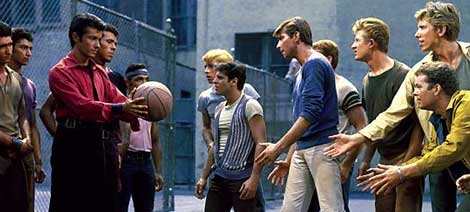
But as a certain 1960s rip-off of “Wagon Train†made abundantly clear – nothing causes individuals to self-identify into clusters like a shared addiction to popular culture. And thanks to the unfettered communication of the Internet, even the most specialized, pop-culture interest can find a like-minded community.
Anyone who has ever been part of a fandom (or watched one splinter in some kind of hierarchical geek war) knows that as fractal-like as these groups can become they all share some certain cultural touchstones to find some kind of “common ground”. Anyone frequenting a science fiction website may have differing exposure to Wells, Asimov, Orson Scott Card, or Spider Robinson – but they have all probably seen “Star Warsâ€. Fans of Anime or Manga have likely all read or watched something by Rumiko Takahashi. All fans of Jazz music have heard “Summertimeâ€â€¦ etcetera. Even outside of a niche group, I can probably make the following joke completely out of left field:
Q: What was the worst sentence ever said in the history of rock and roll?
A: Hey, we should let Ringo sing one.
And I would guess that the vast majority of you would have a good guess what band the joke’s about.
But the connecting line throughout every touchstone I quoted above is that none of it is more than 100 years old (“War of the Worlds” would be the oldest piece at 1898). A shade over 100 years ago John Phillip Sousa was the height of popular music, the Lumeire brothers were cutting edge cinema, and the “super hero†was a concept that wouldn’t be invented for another three decades (arguably there was manga, but it was a lot less… dynamic).
As a society we find ourselves at a point with greater access to vaster stores of information and entertainment than at any point in human history – so much so that there’s no way any one of us could ever read every novel written this year, watch every movie, listen to every record, or see every painting. With the creation (and consumption) of popular culture accelerating, the amount of shared cultural touchstones (even within specialized interest groups) is going to decrease exponentially. There are already people on-line who consider themselves life-long anime fans but have never watched “Akira”, or have no idea who Osamu Tezuka is. There are high-school students who have never heard a song by Elvis Presley, or haven’t the foggiest clue who is the Eggman and who is the Walrus (there are, admittedly, a significantly larger number of individuals globally who have no idea what the hell that song’s about). One of my cousins, who will be a University freshman next year, has never seen an episode of “Mister Rogers”, and has only the vaguest awareness there was a television show by that title.
As groups gather on-line they create new language, rules of behaviour, and events of importance that are incomprehensible ritual to outsiders (for a dynamic example just visit any of the “chans” (some sections Extremely-NSFW) they collectively invent so much unique language and idiom on a daily basis, that without a translation reference like Encyclopedia Dramatica (NSFW) or Know Your Meme I wouldn’t have the foggiest clue what anyone was talking about).
Now hit the “fast forward†button in your imagination a generation to an on-line world where even sub-groups within the same general niche don’t share common interests like some kind of bastard overgrown academia. Where there’s jazz fans who have never heard of Louis Armstrong, (or jazz fans who will only listen to Louis Armstrong) and where Tom Cruise is regarded with the same kind of wan nostalgia as Charlie McCarthy… (some people may have heard of him… but few could actually name anything he did). As these groups become more specialized – dedicating time to a pop culture interest will be more and more like choosing a national allegiance (since one’s “pop-culture cred†will be almost non-transferable). These “culture tribes” will have distinct and unique languages, customs, histories, and idioms that would be incomprehensible to an uninitiated outsider (and after investing years of your life rising to some stature of note in the tribe of, say, “The Legion of Super-Heroes” – do you really want to start at square one just because you suddenly decide you might like say, early 21st century trance?)
Tribalism will be a case not of geographic location (or lifestyle goals) but one of fierce pop culture identification.
How does this affect content creation in a coming age where anyone can create and dissipate content – but target audiences could be as radically fragmented and isolationist as whole cultures and civilizations once were?
I don’t have any answers, other than the vague notion that I don’t want to end up on the wrong sides of the epic “Ska“ vs “Silver Spoons†wars of 2030.

